How to Pray: A Simple Guide to Getting Started
Coleen Myers
You don't need the perfect words to have a conversation with God.
Have you ever wanted to pray but struggled to find the words? Perhaps you're new to prayer, returning to your faith, or simply going through a season where you don't know what to say.
Sometimes we make prayer more complicated than it needs to be. We wonder whether we're saying the right things, praying for long enough or approaching God in the right way.
But prayer isn't about impressive words or perfectly structured sentences. It's about building a relationship with God, bringing our hearts before Him and making space to hear from Him.
Whether you have five minutes or an hour, you can begin right where you are.
Here are some simple ways to develop your prayer life.
1. Start with the P.R.A.Y. Method
One of the easiest ways to approach prayer is to follow a simple structure.
The P.R.A.Y. method helps you move beyond simply asking God for things and encourages you to spend time in worship, reflection, thanksgiving and conversation with Him.
P — Praise
Begin by acknowledging who God is.
Before bringing your requests, take a moment to recognise His goodness, faithfulness, love and sovereignty.
You might thank Him for His protection, acknowledge His holiness or simply tell Him how grateful you are for His presence.
Scripture: Psalm 100:4
Try praying:
"Heavenly Father, I thank You for who You are. You are faithful, loving and merciful. Thank You for being constant, even when life around me changes."
R — Repent
Prayer also allows us to examine our hearts.
Repentance isn't simply about saying sorry. It's about recognising where we've fallen short, asking God for forgiveness and being willing to change direction.
We don't need to hide our mistakes from God.
Scripture: 1 John 1:9
Try praying:
"Lord, forgive me for the times I've allowed my thoughts, words or actions to move me away from Your will. Help me recognise where I need to change and give me the strength to walk differently."
Thanksgiving
Before moving into your requests, pause to remember what God has already done.
It's easy to become so focused on what we're waiting for that we overlook what we've already received.
Thanksgiving reminds us of God's faithfulness, even when circumstances aren't exactly how we'd like them to be.
Scripture: 1 Thessalonians 5:18
Try praying:
"Father, thank You for the blessings I sometimes overlook. Thank You for another day, for the people You've placed in my life and for the ways You've carried me through difficult seasons."
Intercession
Intercession means praying on behalf of others.
Think about the people around you. Your family, friends, colleagues, church community or someone you know who is facing a difficult season.
You can also pray for your community, leaders and the wider world.
Scripture: 1 Timothy 2:1
Try praying:
"Lord, I lift up those who are struggling today. Strengthen those who feel weak, comfort those who are grieving and provide for those facing uncertainty. Help me to recognise where I can be an encouragement to someone else."
Petition
Petition is where we bring our personal needs and requests before God.
There is nothing wrong with asking God for help.
Whether you're seeking wisdom, provision, healing, direction or peace, Scripture encourages us to bring our concerns before Him.
Scripture: Philippians 4:6–7
Try praying:
"Father, You know the things weighing on my heart. I bring my concerns before You and ask for wisdom, guidance and peace. Help me trust Your timing and remain faithful while I wait."
Remember: Prayer isn't a checklist. This structure is simply a helpful starting point, particularly when you don't know where to begin.
2. What If You Don't Know What to Say?
There will be moments when prayer feels difficult. Perhaps you're tired, overwhelmed, disappointed or struggling to understand what's happening in your life. Sometimes all you can manage is a few words, and that's okay.
Romans 8:26 reminds us that the Holy Spirit helps us in our weakness.
You don't need to pretend everything is fine when it isn't.
Your prayer might simply be:
"Father, I don't know what to say today, but I need You."
Or:
"Lord, help me understand what I'm going through."
Sometimes the most meaningful prayers begin with honesty.
3. Learn from the Lord's Prayer
When Jesus taught His disciples how to pray, He gave them a model that continues to guide Christians today.
You can find the Lord's Prayer in Matthew 6:9–13.
Our Father which art in heaven, Hallowed be thy name. Thy kingdom come, Thy will be done in earth, as it is in heaven. Give us this day our daily bread. Forgive us our tresspasses, And lead us not into temptation, but deliver us from evil: For thine is the kingdom, and the power, and the glory, for ever. Amen.
Rather than viewing it as something to recite without thought, take time to understand what Jesus was teaching.
The prayer reminds us to:
- Honour God and recognise His holiness.
- Seek His kingdom and His will.
- Depend on Him for our daily needs.
- Ask for forgiveness and forgive others.
- Seek His guidance and protection.
The Lord's Prayer teaches us that prayer is about more than our personal requests. It encourages us to acknowledge God's authority, trust His provision and align our hearts with His will.
Read it slowly.
Which part of the prayer speaks most strongly to you today?
4. Make Time to Listen
Prayer isn't only about speaking; sometimes we're so focused on getting through everything we want to say that we forget to spend time being still before God.
After praying, take a moment to pause; you might reflect on a scripture you've read, write down something you've been thinking about or sit quietly in God's presence.
Scripture: Psalm 46:10
Being still doesn't mean expecting an immediate answer. It means allowing yourself time to reflect, surrender your concerns and remain attentive to God's Word.
5. Keep a Prayer and Reflection Journal
One practice that can help strengthen your prayer life is journalling; writing things down allows you to reflect on your conversations with God, recognise patterns in your thoughts and revisit prayers over time.
You don't need to write pages every day. Start with a few simple questions:
- What am I grateful for today?
- What is weighing on my heart?
- What scripture is encouraging or challenging me?
- What am I trusting God with?
- What have I learnt through this season?
Over time, your journal can become a reminder of the prayers you've prayed, the lessons you've learnt and the ways you've grown.
It's also an opportunity to recognise answers to prayer that you might otherwise have forgotten.
6. Start Small and Stay Consistent
You don't need to begin with an hour of prayer every morning; start with what you can realistically commit to. That might mean five minutes before starting your day, a quiet moment during your lunch break or spending time in prayer before going to bed.
Consistency matters more than trying to create a routine you cannot maintain, and remember, prayer doesn't have to happen in one particular place.
You can pray while walking, travelling, sitting quietly at home or preparing for the day ahead.
The important thing is making time to connect with God.
7. Give Yourself Room to Grow
Your prayer life will develop over time; there may be seasons when prayer comes naturally and others when you find it more difficult. Don't allow comparison to discourage you; you don't need to sound like someone else when you pray.
God knows your heart, as you spend more time reading Scripture, praying and reflecting, you'll begin to develop greater confidence in approaching Him. When you don't know where to start, remember that you can always begin with a simple:
"Father, thank You for today."
A Little Encouragement for Your Prayer Journey
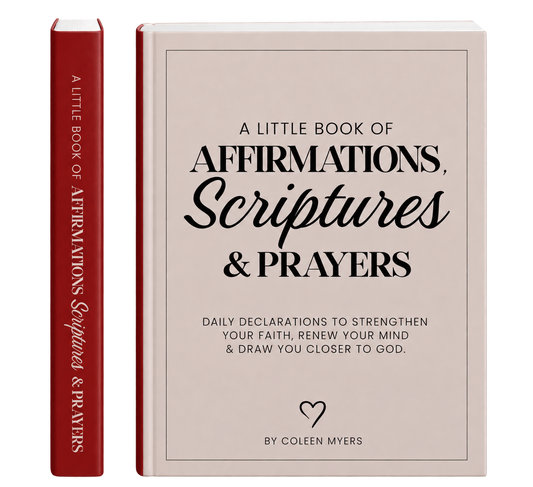
Prayer has been an important part of my own faith journey, and I know there are moments when finding the words isn't always easy. It's one of the reasons I created A Little Book of Affirmations, Scriptures & Prayers. I wanted to create something small enough to carry with you, but meaningful enough to turn to during different seasons of life.
Whether you're feeling anxious, overwhelmed, uncertain or need encouragement, the book brings together Scripture, affirmations, declarations, prayers and gratitude reflections to help you pause and reconnect with God's Word.
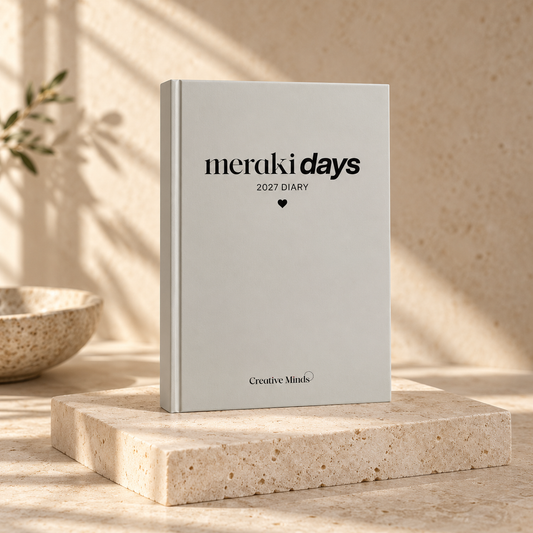
Alongside the book, the Meraki Days Reflection Journal offers a dedicated space to reflect, write, pray and become more intentional about your personal and spiritual growth.
You don't have to have everything figured out before you begin.
Start where you are. Speak honestly. Keep showing up.
Your journey of prayer and reflection can begin today.
Continue Your Journey
Explore A Little Book of Affirmations, Scriptures & Prayers and the Meraki Days Reflection Journal.
Visit the Creatively Minded online shop to explore the collection and place your order.